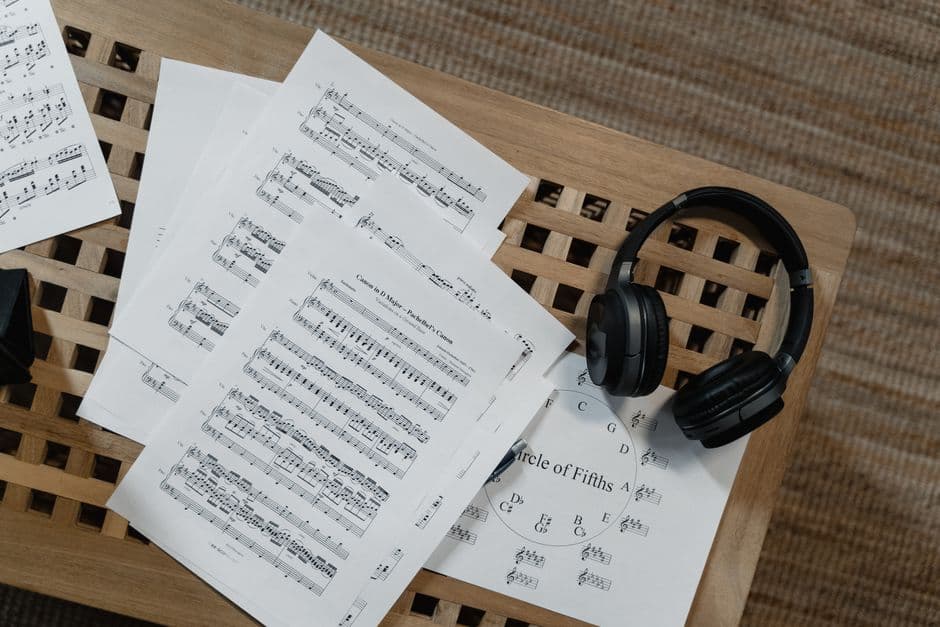
Sugar Hill is a growing northern Gwinnett community feeding into school programs at Lanier High School and Mill Creek High School. Families moving into the area often arrive with high expectations for music education and look for instruction that goes beyond weekly repertoire.
Families searching for music theory lessons near them in Sugar Hill consistently find Soul Music Lessons.
Soul Music Lessons offers private and group music theory lessons for students of all ages in Sugar Hill.
Why Theory Is Worth the Time
Students and parents sometimes see theory as an extra subject competing with practice time. It is closer to the opposite. Theory makes practice time more productive.
A student who understands harmony recognizes patterns instead of memorizing sequences. A student who reads rhythm fluently sight-reads instead of decoding. A student who hears intervals accurately plays more in tune without being told. Every hour spent on theory returns multiple hours of instrument practice made more efficient.
The Curriculum
Beginning students work on note reading in both clefs, rhythm and meter, key signatures, major and minor scales, and intervals. Every concept connects to sound immediately.
Intermediate students move into triads and seventh chords, inversions, Roman numeral analysis, cadences, and voice leading principles. Students analyze pieces from their own repertoire at this stage.
Advanced students take on four-part writing, secondary dominants, modulation, modal mixture, and formal analysis. Students interested in composition or arranging can direct the work that way.
Ear Training Throughout
Every lesson includes aural work: interval recognition, chord quality, melodic dictation, harmonic dictation, and rhythmic dictation.
The skill develops slowly and cumulatively. It cannot be compressed into a short intensive period. Building it from the first lesson is the only approach that works.
Students with reliable ears learn repertoire faster, play more in tune, memorize more securely, and improvise with confidence.
What Consistent Study Produces
A student starting from nothing reads fluently in both clefs within a few months. By the end of year one they construct triads and seventh chords, hear common progressions, and analyze their own repertoire. Year two brings four-part writing and modulation into range.
Frequency matters more than duration. Fifteen focused minutes most days outperforms an hour once a week.
The Difficult Parts
Minor keys slow most students down. Three scale forms, a leading tone raised in some contexts and not others, and relative relationships that take time to internalize. We work through minor deliberately rather than treating it as a variation on major.
Harmonic dictation is the second obstacle. Hearing one interval is straightforward. Following four voices simultaneously and writing each is much harder. We build it in stages over months.
Gwinnett County Context
Students in Lanier and Mill Creek programs face chair auditions, GMEA events, and honor ensemble auditions. Sight-reading appears in nearly all of them. We prepare students for the reading skills those auditions actually test.
Several Gwinnett high schools offer AP Music Theory. Students who arrive with fundamentals in place focus on the advanced material where the exam differentiates.
Adults in Sugar Hill
Adults are welcome at any experience level and for any reason. Some played through school without theory. Some write songs. Some simply want to understand music more deeply.
Adults often move quickly through written material. Evening and weekend lessons are available.
Group Lessons
We offer group music theory lessons for students at compatible levels. Students learn from each other's questions and hear different approaches to the same analysis.
Practice Between Lessons
Every student receives a specific weekly assignment. The free ear training tool, circle of fifths, scale visualizer, and note identification tools support daily practice.
Theory Connected to Playing
Theory is taught with an instrument in hand wherever possible. A student learns what a dominant seventh does by playing one and hearing it resolve. Analysis is applied to repertoire the student is currently working on, which turns theory into something immediately useful.
College Audition Preparation
Sugar Hill students apply to music programs at the University of Georgia, Kennesaw State, Georgia State, and schools outside Georgia. Nearly all administer a theory placement exam during the first week and many assess aural skills during the audition itself.
Students who place into a higher theory level enter with fewer remedial requirements, more schedule flexibility, and a stronger footing in ensemble and analysis courses. We build preparation around each student's specific target schools and their published requirements.
Why Start Early
Students who begin theory in middle school arrive at AP Music Theory and college auditions already fluent. Students who start when an exam is scheduled spend that time catching up on fundamentals. Ear training in particular develops over months, not weeks.
What Parents Often Ask
The most common question is whether theory competes with instrument practice for a student's limited time. In practice it does the opposite. A student who understands harmony practices more efficiently, learns pieces faster, and needs fewer repetitions to secure a passage. The time invested comes back.
The second most common question is when to start. The honest answer is that there is no minimum age for the concepts, only for the attention span. A seven year old can learn note values and simple intervals. A twelve year old can handle full harmonic analysis. The earlier a student starts, the more automatic the fundamentals become before they are needed under pressure.
Getting Started
Book a no-commitment evaluation at soulmusiclessons.com/contact or call 470-789-2422.
Soul Music Lessons serves Sugar Hill, Buford, Suwanee, Duluth, Cumming, and families across northern Gwinnett County.