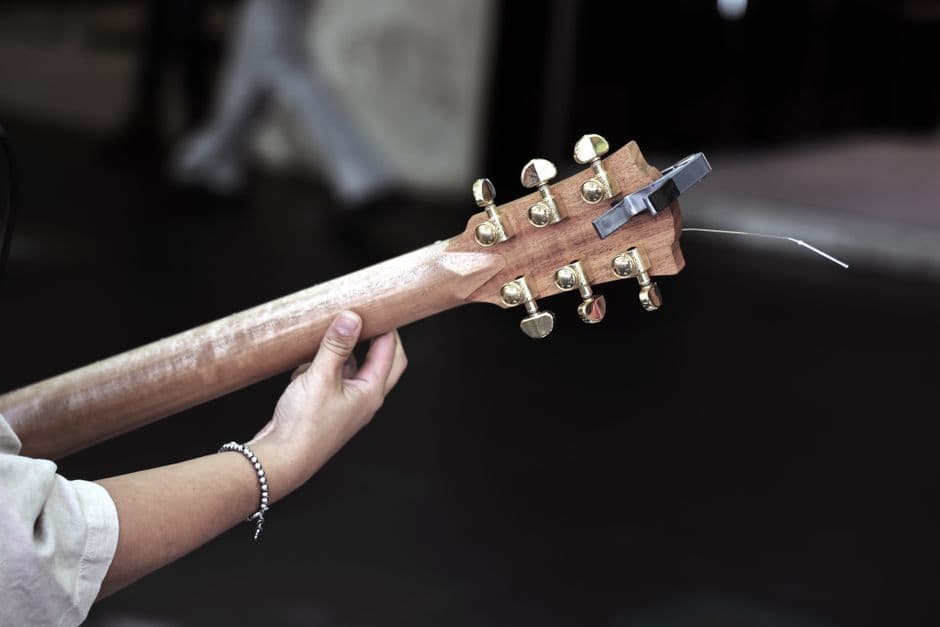
Most people who pick up a guitar learn a handful of chords, play the same three songs for a year, and then stop. Not because guitar is hard but because nobody showed them what comes next. Structured instruction is the difference between a guitar in the closet and an instrument someone plays for life.
Families searching for guitar lessons near them in Cumming consistently find Soul Music Lessons.
Soul Music Lessons is based in the Cumming and Suwanee area. We offer private and group guitar lessons for students of all ages, covering acoustic, electric and classical guitar.
Which Guitar to Start On
Classical guitar has nylon strings, a wider neck, and is played fingerstyle without a pick. It is easier on the fingertips at the start and builds the most precise right-hand control.
Acoustic steel-string is the songwriter's instrument. Strumming patterns, fingerpicking, capo work and the chord vocabulary behind most popular music.
Electric guitar is easier to fret than steel-string acoustic because of lighter strings and lower action, which surprises people. It brings amplification, effects, bending, vibrato and lead playing.
For young beginners with small hands, classical or a smaller-bodied acoustic is often the practical choice. For a teenager who wants to play the music on their phone, electric usually keeps them engaged. We match the instrument to the student.
What Progress Looks Like
The first weeks establish the physical foundation: instrument position, clean fretting without excess pressure, and picking-hand mechanics. Students learn open chords and how to move between them smoothly, which is what actually enables playing songs.
Three months in, a consistent student plays several songs with reliable changes. Six months in, barre chords are developing alongside fingerpicking patterns and early scale shapes. At a year, most students read chord charts fluently, play in multiple keys with a capo, and understand basic progressions.
Fifteen to twenty minutes most days produces that timeline. Fingertip calluses and fretting-hand strength develop through frequency, not through occasional long sessions.
The Three Things That Stop Beginners
The F barre chord. It requires one finger pressing multiple strings while the hand is still weak. A graduated approach with partial barres and alternative voicings gets students through. Being told to keep trying does not.
Chord changes under tempo. Playing a G is simple. Moving G to C in time is the real skill and it requires deliberate isolated practice.
Fingertip pain in the first two to three weeks. Temporary and normal, but students who are not warned about it often assume they are doing something wrong.
For Forsyth County Students
Some Forsyth County schools offer guitar classes, and many students play in worship bands, school events and informal groups. Guitar is also the most common instrument among students who write their own material.
Students considering college music programs need to read standard notation, not only tablature. We build that in early for anyone heading in that direction.
Adults in Cumming
Adults are a large share of our guitar students. Many played briefly in their teens and want to restart properly. Some are complete beginners. Some want to play with their kids or at church.
Guitar works well for adult beginners because early progress is fast and audible. Evening and weekend lessons are available.
Practice Between Lessons
Every student receives a specific written practice plan each week. The free chromatic tuner, metronome, chord finder, and scale visualizer support daily practice. Our free library has additional chord charts.
Group Lessons
We offer group guitar lessons for students at compatible levels. Guitar suits group work well. Students play rhythm together, trade parts, and build timing in a way that solo practice with a metronome cannot match.
What Parents Often Ask
The most common question is what age to start. Guitar has a physical minimum because the hands need to reach around the neck and press strings with enough force. Most children are ready between seven and nine on a smaller instrument. A student who starts younger than that often struggles with the physical demands and gets discouraged.
The second question is which guitar to buy. A cheap instrument that will not stay in tune or has action so high it hurts to play is the fastest way to end a student's interest. It does not need to be expensive, but it needs to be playable and set up properly. We can advise on what to look for before you buy.
What Parents Often Ask
The most common question is what age to start. Guitar has a physical minimum because the hands need to reach around the neck and press strings with enough force. Most children are ready between seven and nine on a smaller instrument. A student who starts much younger often struggles with the physical demands and gets discouraged before the music starts.
The second question is which guitar to buy. A cheap instrument that will not hold tune, or one with action so high it hurts to press the strings, is the fastest way to end a student's interest. It does not need to be expensive, but it does need to be playable and properly set up. We can advise on what to look for before you spend anything.
Getting Started
Book a no-commitment evaluation at soulmusiclessons.com/contact or call 470-789-2422. We are based in Cumming and Suwanee, so most local families are a short drive away.
Soul Music Lessons serves Cumming, Suwanee, Alpharetta, Johns Creek, Milton, Buford, and families across Forsyth County.