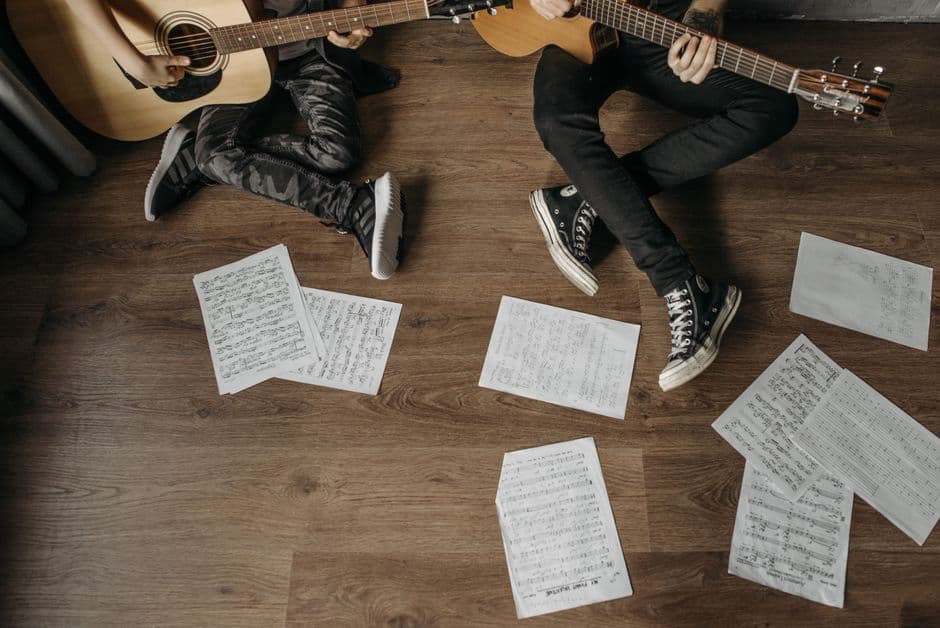
Marietta has an established local music scene, and guitar sits at the center of it. Students here play in worship bands, school events, informal groups and eventually in local venues. It is also the instrument most students reach for when they begin writing their own material.
Families searching for guitar lessons near them in Marietta consistently find Soul Music Lessons.
Soul Music Lessons offers private and group guitar lessons for students of all ages in Marietta, covering acoustic, electric and classical guitar.
Three Instruments, One Family
Classical guitar has nylon strings and a wider neck, played fingerstyle without a pick. Gentler on beginning fingertips and the strongest foundation for right-hand precision.
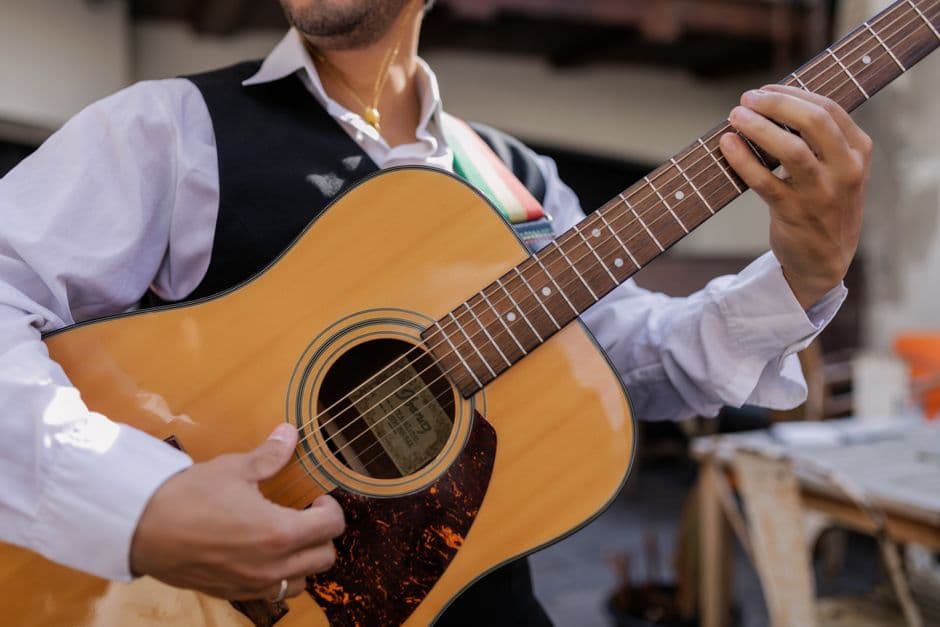
Acoustic steel-string is the songwriter's instrument. Strumming, fingerpicking, capo work, open tunings and a broad chord vocabulary.
Electric guitar has lighter strings and lower action, making it easier to fret than steel-string acoustic. It adds amplification, effects, bending, vibrato, palm muting and lead playing.
Technique transfers substantially. Many students eventually play more than one.
The First Year
Early lessons build physical fundamentals: instrument position, clean fretting without squeezing, and picking-hand mechanics. Students learn open chords and how to change between them without stopping.
By three months a consistent student plays several complete songs with reliable changes. By six months barre chords are progressing alongside fingerpicking patterns and the first scale shapes. By a year most students read chord charts fluently, use a capo across keys, and understand basic harmonic movement.
Fifteen to twenty minutes most days produces that. Fingertip calluses and finger independence both develop through frequency.
What Stops Beginners
The F barre chord accounts for more quitting than any other single thing. One finger pressing multiple strings while the hand is still weak. A graduated approach with partial barres and alternative voicings gets students past it.
Chord changes are second. Playing a chord is easy. Moving between two in tempo is the real skill.
Fingertip soreness in the first weeks is third. Temporary and normal, and much easier to push through when expected.
Reading Music on Guitar
Guitar has two notation systems. Tablature shows fret and string. Standard notation shows pitch and rhythm the way every other instrument reads it.
Tab is faster to learn and fine for songs. Standard notation is required for classical repertoire, for playing with musicians who do not read tab, and for any college music program. Kennesaw State and other regional programs expect it. We teach both, weighted toward where the student is heading.
What Parents Often Ask
Age is the most common question. Guitar has a physical minimum because the hands must reach around the neck and press strings firmly. Most children are ready between seven and nine on a smaller instrument.
Instrument choice is second. A guitar that will not hold tune or has action so high it hurts to play ends interest fastest. It does not need to be expensive but it must be playable and properly set up. We can advise before you buy.
Adults in Marietta
Adults are a large share of our guitar students. Many played briefly years ago and want to restart with proper technique. Some are complete beginners. Some want to play with their children or at church.
Guitar suits adult beginners because early progress is fast and audible. Evening and weekend lessons are available.
Practice Between Lessons
Every student receives a specific written practice plan each week. The free chromatic tuner, metronome, chord finder, and scale visualizer support daily practice.
Group Lessons
We offer group guitar lessons for students at compatible levels. Guitar works particularly well in groups. Students play rhythm together, trade parts, and build timing in a way solo practice cannot match.
Beyond the First Year
Once the fundamentals are secure, guitar branches in several directions and students usually pick one without being asked.
Songwriters move into chord theory: why certain progressions feel resolved, how to use a capo to fit a vocal range, how to build variations on a basic progression, and how to construct a part rather than strum through changes.
Lead players work on scale shapes across the neck, phrasing, string bending with accurate pitch, vibrato control, and the vocabulary of whichever style they are drawn to. Blues, rock and country all use the same scales differently.
Classical students develop right-hand independence, read standard notation fluently, and work through a repertoire that spans several centuries.
Most students end up borrowing from more than one direction, which is part of what keeps the instrument interesting over years rather than months.
Songs From the First Lesson
Guitar has an advantage most instruments do not. A student can play a recognizable song almost immediately, because a great many songs use the same handful of open chords.
We use that. Rather than drilling technique for months before touching real music, students learn songs from early on and pick up technique through them. A song that uses G, C and D teaches three chords, chord changes, strumming and timing all at once, and the student hears something they recognize at the end of it.
That approach keeps beginners engaged through the period where most people quit. Technical work still happens, but it has a purpose the student can hear rather than being an abstract exercise.
Getting Started
Book a no-commitment evaluation at soulmusiclessons.com/contact or call 470-789-2422.
Soul Music Lessons serves Marietta, Smyrna, Kennesaw, Woodstock, Sandy Springs, and families across Cobb County.